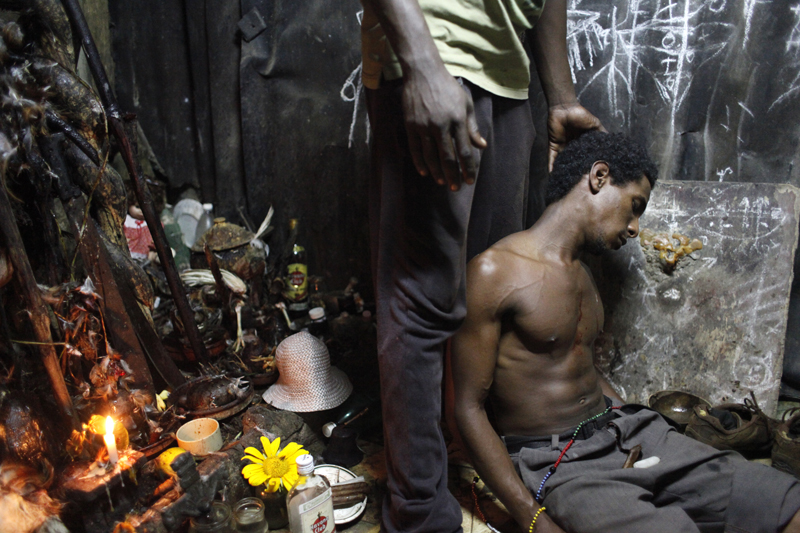

Before we begin getting into the concept of promises, we have to address the context. This article will feature a perspective based on an African Traditional Religion known as Palo Mayombe informally or Nkisi Malongo formally. Even if you are an initiated member of said traditional religion, there is no guarantee that your initiation is from the same lineage. If you already have an elder or are initiated, please learn from your elder not some random stranger online. If you have no elder and you just want to learn more about this tradition, feel free to continue reading but keep in mind that if you were to initiate to another lineage they may have a different understanding and so you may have to unlearn what you will learn from here.
What are promises? What is the spiritual implication to them? Why do people make promises with spirits? Are there dangers to making promises? Are there different kinds of promises? There are so many questions revolving around this subject and only so much space and time that can be dedicated to answering them. First let us address what a promise is in the first place. A promise is an oath or a vow that certain things will be or not be done. Seeing as how the definition is broad, it leaves wiggle room for there to exist multiple different kinds of promises. Lets take for a promise so help you God. This would be a promise that is made in the presence of God and so it becomes insured by God. You can also have a promise from one person to multiple people, a promise from one living person to a spirit etc. There are a seemingly endless amount of variations to promises.
To add more complexity to the conversation, not only is there so many variations to promises but there are spiritual implications to them. Lets take for example the simplest form of a promise, the oath to do something. This oath is between two or more parties. This implies a debt from one to another. This debt can be spiritual in nature and can be the basis behind collection, retribution or consequences. The whom also matters here. The living have free will, it is part of the condition of living. Spirits, however, play by a whole different set of rules. Spirits cannot default on promises. If they make a promise to someone living that they will do something, they must do it. There is something of note here that while the spirits are bound by virtue of who they are, some of the living are bound by virtue of their beliefs. This is to say that while we do have free will, our beliefs compel us to behave in a manner that is consistent with that of someone within those beliefs and so, we also are bound to make good on those promises.
While we can extend this article almost infinitely as to all the aspects of promises, the one we should focus on is promises made between the living and the spirits. Why do people make these kinds of promises? Well there is also an almost infinite reasoning as to why these promises get made but there are major reasons. There are two major reasons for the living making promises with the spirits, the first one is because the living person needs help and offers a promise in exchange. This is the most common reason and is also the promise most broken. The living ask for help, make a promise to do something in return, receive the help they ask for and then proceed to never do what they promised to do. The second most common reason involves getting themselves out of a previous bind. Lets say for example, a person was offered as a promise to a deity of a specific pantheon by their grandmother but they have no intention of being involved with that pantheon. They can seek out something else and make their own vows or initiations, effectively breaking the previous ones that they never consented to. These ones are also often broken but not as much as the previous ones.
The dangers to making promises with spirits are very real. The dangers are based on the understanding that spirits cannot break their promises. This doesnt seem to be that bad on the surface level but when you begin to dig into this, it takes a very dark turn. The living can make promises with spirits and because they have free will, they often do not hold up their end of the promise, while the spirits are compelled to uphold theirs. This can become a very toxic relationship very quickly, where the living is enslaving the spirits for their own personal gain. This will always lead to resentment and that resentment can become hostility, which can imply very serious consequences. It is paramount importance that the living never make promises they cannot or will not keep with the spirits. The spirits being enslaved behind promises almost always leads to violent consequences, as it should. When the spirits have determined that they want their pound of flesh, there is very little anyone can do to calm them down and while elders can help, most will refuse or help at an otherworldly cost. Their reasoning is simple: You deserve what is happening to you. Why should anyone save you from the consequences of your own actions? Why should anyone that is attempting to enslave another be saved in the first place? Absolutely not and if I were to do it, it would have to be for a cost that would make it worthwhile for me to approach the spirits in the first place.
There are so many more things to discuss on the subject of promises but as we extend this article, the spiritual relevance diminishes because more and more of those things become more interpersonal issues and less spiritually related issues. This is not to say that there are no other issues interconnecting promises with spirituality worthy of conversation, just that the major points have been covered and further extending the article becomes an alphabet soup with little to gain and should be touched on individually in a future setting.
If you have made it this far, thank you.