You have probably been told there are two religions. On one side sits Palo Mayombe, the tradition of the stick, dark and feared, the one people whisper about. On the other side sits Nkisi Malongo, spoken of by a smaller number as if it were a gentler version, a rebrand built to make the first one acceptable to polite company.
That is false, and I want to be exact about why. There is one tradition here. It has two names. One name is what the tradition calls itself. The other is what the world ended up calling it. If you learn the difference, you stop being confused by a question that half the people who approach this House carry with them, and you stop being easy to mislead.
The name the tradition gives itself
Nkisi Malongo is the name this tradition uses for itself. Break the name into its parts. Nkisi is sacred medicine. Malongo is distant lands. Put together, the name reads two ways. It says sacred medicine in distant lands, and it says the spirits in distant lands. Both readings are correct. Both are meant.
What makes the medicine sacred is not the herb and it is not the earth and it is not the stick. The spirits carry it. A vessel, a bundle of roots, a stone, none of these are the medicine on their own. What is inside them is what makes them what they are. This is why the same word, Nkisi, names both the spirits and the consecrated objects a house keeps. The reason fits in both directions. The thing is named for what lives in it.
Nkisi Malongo answers to another name too. It is also called Las Reglas de Kongo, the rules of the Kongo. This House uses Nkisi Malongo because that is the name the tradition gives itself, the one that belongs to the people before anyone else arrived and renamed them.
The name the world arrived with
Palo Mayombe is the name most people know. It is Spanish. Palo is the stick, and the surrounding vocabulary grew from that, which is also why Palero is a slur that a person in the tradition does not use for themselves. Mayombe names a people and a coastal region of the old Kongo world. So the name the world learned is a Spanish phrase pointing at one branch of the tradition, one of the oldest, through the language of the colonizer who renamed everything he touched.
Here is the sentence that clears up most of the confusion. Palo Mayombe is the name of the oldest branch. It became the name everyone used for the whole. The tradition did not change its name. What happened is that the name of one branch became the name people had, the way a single brand can end up standing in for an entire category. When you say Palo Mayombe today, you are usually naming the whole tradition, whether or not the person saying it knows that. The whole answers to that name now, and it always did.
So there is no Palo Mayombe religion and a separate Nkisi Malongo religion standing in two corners. There is one tradition with a formal name and a popular name, and the popular name is the smaller piece of the true thing.
Why this confusion has teeth
The confusion is not harmless trivia. People build on it. A stranger arrives, hears the two names, and is told that Nkisi Malongo is the real tradition while Palo Mayombe is something else, something worse, something borrowed. Turn it around and the same stranger is told that Palo Mayombe is the real thing and Nkisi Malongo is a new invention dressed up to sound African.
Both stories serve the same purpose. They break the tradition into pieces so that nobody can trace it, and a tradition nobody can trace is a tradition anyone can claim. When the names are kept apart, a person with no lineage can stand between them and sell access to a thing that, by the telling, has no owner.
I will give you the correction plainly. One name, one tradition. Understand that and the door stays closed on a whole class of deception.
Where the tradition actually begins
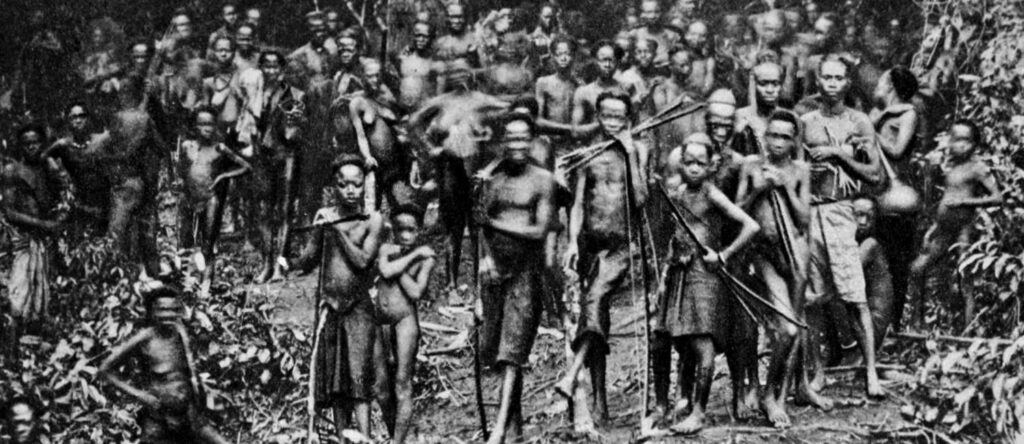
The history belongs to Central Africa, in what is known as Kongo dya Ntotila, the old Kongo Kingdom. I say the old kingdom on purpose. The K in Kongo matters. When the tradition was carried to Cuba through the slave trade, there was no Congo. Congo is what became of the kingdom after it was ravaged and its people were stolen. To write the story with a C from the start is to start it after the crime.
The Kongo Kingdom was a major Central African power that ran from roughly 1390 to 1914. It covered parts of what is now northern Angola, the west of the Democratic Republic of the Congo, the Republic of the Congo, and southern Gabon. Its capital was Mbanza Kongo. It was led by the Mwene Kongo, and it held the Kingdom of Loango as a vassal. The tradition still draws from the way that kingdom was governed, which held two pillars of power, the spiritual and the sovereign, standing side by side.
This is not a tradition that was born in Cuba. It is the continuation of what already existed in the Kongo. The Bantu migration into the region happened roughly four thousand to five thousand years ago. Underneath that, a far older group ancestral to these beliefs lived in the region for tens of thousands of years before them. The continent carries this memory long, and the tradition is older than any island it later reached.
The nine clans and what a house is
When the first Mwene, Mtimu Mwene, gathered the nine major clans of the Kongo, he adopted the chief of each as his own son. That made each chief a crown prince and let the King of Kongo come from any of the nine families while the whole still stood as one royal family.
The Kongo never observed blood ties, and by royal decree the measuring of blood relations was forbidden. Going by blood was to challenge the decree and the claim of the Mwene. The habit of proving kinship by blood belonged to the colonizers, who needed that proof before they would treat a person as kin. The tradition goes by what is in the heart, not by blood.
Then slavery shattered the kingdom, and the spiritual side had to become its own sovereign power. Each house became its own nation, and each nation came from a pre-existing one. A house is commissioned under the authority of one or more of the nine princes. Without that commission a Nganga is nothing more than an ancestor altar. In this way the houses of Nkisi Malongo are an extension of Kongo, the way a territory is an extension of the nation it belongs to.
One core, different hands
A rama is a branch. The tradition has more than one, a house belongs to one, and the branch a house belongs to is part of what defines it. Where a person is brought in through initiation is where their lineage runs from.
You can hold the branches in your mind with a comparison. A church can hold one belief in the creator and one story about its central figure, while inside it there are denominations that read the same book and build the same relationship differently. They disagree, and they do not share every practice, yet underneath they are still one religion. The branches work the same way. At the core they are all Nkisi Malongo, and they come at the spirit with different modalities and different means.
The oldest branch is Palo Mayombe, and this is where the popular name came from. Less work is done with human bone here. The Mpungu that its munanzos walk with is Nsasi, the first Nkisi to arrive in Cuba with the trafficked people. Its initiates are called Mayomberos and Mayomberas. Palo Briyumba holds Sarabanda at the head rather than Nsasi, does more work with human skull and bone, and venerates more of the Kimpungulu. Briyumba means to work with the spirit of death. Palo Kimbisa is the third, and it is the one that sits apart and takes the most scrutiny from the others. Some Tatas hold that Kimbisa was begun without the proper licensia, the license to start a new branch, and that it died out in Africa and was reestablished in Cuba rather than carried across in a living lineage.
The two that were present in the Kongo from the beginning were Palo Mayombe and Palo Briyumba. Everything else is a later growth from that root.
A branch is not a style
A branch is not a preference a person shops for, and it is not a flavor. The branch a Tata comes from is the lineage their authority runs back through, and it is one of the first things anyone in the tradition needs to know about them. A branch, a house, and a lineage, each named and checkable, are what turn a claim into a fact you can test.
This is why the two names matter beyond vocabulary. When a person tells you they practice Nkisi Malongo, you can ask which branch, which house, and which lineage. When someone leads with Palo Mayombe as if it were a separate darker faith, you can ask the same questions and watch what happens. The names are not decoration. They are the handles by which a teaching can be held up and inspected.
Not a branch of anything else
Nkisi Malongo is its own tradition, with its own origin in the Kongo. It is not a branch of another African tradition, and it is not the dark side of a lighter one.
The most common version of this error pairs Palo with Santeria. Santeria and Palo Mayombe are two separate traditions carried to Cuba by different peoples from different parts of Africa. Santeria is the word most people arrive with. That tradition calls itself Lucumi, and it has been Lucumi since the 1500s. The name Santeria is Spanish for saint worship, and it describes the practice of hiding the Oricha behind the Catholic saints so the tradition could be carried in the open. Lucumi comes from the Yoruba lands, in what is now Nigeria. Nkisi Malongo comes from the Kongo, in Central Africa. Two peoples, two languages, two cosmologies. The Mpungu were hidden behind Catholic saints in the same way the Oricha were, and in neither case did the spirit and the saint become one thing.
Cuba is where the two landed side by side. A large part of the Africans trafficked there came from the Kongo and a large part from the Yoruba lands, enslaved in the same place, in the same generations, under the same prohibition. That shared ground is why the two get spoken of in one breath. They share a country and a history of being outlawed. They do not share an origin.
A person can be initiated into both, and many are. It takes two houses, two elders, and two sets of ceremonies kept as two things. The difficulty is not the arrangement. It is what the two traditions ask when they disagree. Lucumi holds that a person is not to seek harm on another, even one who worked witchcraft against them. Palo Mayombe holds that a hex which was sent gets sent back. A person in both then stands in two places, and both traditions know it.
The idea that Palo Mayombe is the dark side of Santeria is old and it does harm. It files one sovereign tradition under another and splits them into good and evil, one kept clean and the other used for the dirty work, as though the differences between them were only skin deep. They are not skin deep. They are different peoples meeting on one island.
The same lie that makes two names into two religions
There is a pattern here worth naming, because it repeats. The tradition has been told as a monster under the bed. The internet handed the wrong people private information, that information was corrupted and republished into sales strategies, and the main selling point became something for a customer to fear. That fear serves two angles at once. It builds a boogeyman to blame while selling services to people who are not initiated, and it builds interest in curses and hexes against enemies.
The two-name confusion is one tool in that pattern. Split the tradition, darken one half, and you have a thing to sell access to and a thing to sell protection from. Understanding that Palo Mayombe and Nkisi Malongo are one tradition removes a lever the deception leans on. The tradition itself, in its proper form, is one of love, protection, survival, and liberation. It has tools that can be misused, the way any religion does. It is not inherently negative, and it is not two things.
How to hold the names
Use Nkisi Malongo when you mean the tradition that names itself, the whole living body with its cosmology, its orders of spirit, its branches, and its ceremonies. Use Palo Mayombe when you mean the oldest branch, and know that the world will usually hear it as the whole, because the branch name became the popular name. When you write about the tradition, do not set the two names against each other as if one were the real thing and the other a copy. There is no copy. There is one tradition wearing the name it chose and the name it was given.
Two pillars held the Kongo Kingdom, the spiritual and the sovereign. That structure has not vanished. It moved into the houses, each one its own nation, each commissioned under the princes, each carrying a branch, a house, and a lineage that can be named and checked. That is why the names are not a small matter of preference. They are the first thing a person can be asked to hand over, the link in the chain that lets you tell a real teaching from a mouth that only sounds like one.
If you remember one line from all of this, make it this one, and read it exactly. Palo Mayombe and Nkisi Malongo are two names for one tradition. One is the branch that gave the world its word. The other is the name the tradition keeps for itself. Learn both, and the deception loses its favorite tool.