The words for the orders of spirit get used as though they were interchangeable. They are not interchangeable, and a reader who hears Mpungu, Nkisi, Simbi, Nkita, Ntembo and Nfumbe used for the same thing has been told something that is not true. This is what each one is. Where each one sits is a different question and it is answered on the cosmology page.
The Mpungu are the highest of them
The Mpungu, also called the Kimpungulu, are the gods of the tradition. Mpungu is the singular and the plural, and Kimpungulu is the same word in its plural form rather than a separate rank. They exist to help a person reach the greatest potential that person has and to come closer to Nzambi. They are gathered on their own page, one entry at a time.
The Nkisi are the spirits of the earth
The Nkisi are the spirits found naturally on the earth. They are approached through the trees, the herbs and the roots, which is where they are. The word Nkisi does a second job as well, because the tradition also calls the sacred objects and charms Nkisi, and the reason one word covers both is that the spirits are what make the objects what they are. Nkisi is defined in the glossary as well.
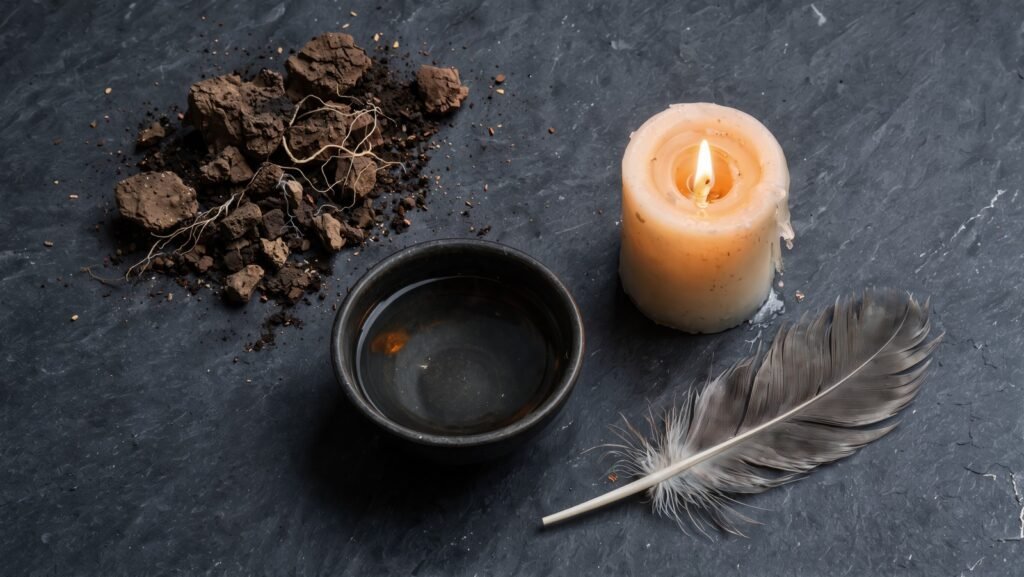
The Simbi are the spirits of the water
The Simbi live in certain waters on the earth, by the creeks, the springs and the ponds, and in the old Kongo kingdom they were the Bisimbi. They are the guardians of the water they inhabit, and they are approached with great respect, because they can bring chaos, destruction or death on anyone who disturbs what is theirs. They are not a local matter either. They travelled, and they are present in the Kongo-Petwo nation of spirits in Haitian Vodou. The water is where the confusion about sirens comes from, and that is dealt with on its own page.
The Nkita are the spirits of the fire
The Nkita are the fire spirits. They inhabit the places where the element of fire is most present, and they belong to the fire itself rather than to anything a person keeps.
The Ntembo are the spirits of the air
The Ntembo dwell in the air. They come after the Nkita in the order the tradition gives, and they are the air in the same way the Nkita are the fire and the Simbi are the water.
More than the element they are tied to
An element tells a reader where a spirit is found. It does not tell them what the spirit does, and the two are not the same thing. Every order carries roles that have nothing to do with the element it is tied to.
The Nkita are the clearest case. They are the fire spirits, and beyond that they are the mighty chiefs of whole geographic areas. They are the ones who grant a person permission to practice within their region.
The Simbi are the guardians and healers of whole bloodlines. They are water spirits, and the thing they attend to is a line of people rather than one person.
The Nkisi are fierce protectors of whole kingdoms. They are earth spirits, and the scale they work at is a kingdom rather than a person, a family or a house.
The Nfumbe are the dead
Nfumbe means the dead one. It is a blanket term for the forces of the dead, or the collective of ancestral spirits, and the word covers the spirit and the vessel that holds it at the same time. An Nfumbe does not have to be an ancestor of the Tata who works with it. It can belong to the larger collective that the Tata belongs to, which is a different thing from being a family spirit and should not be confused with one. The Nfumbe are the ones approached most often when a Tata goes to the Nganga to work, and they are how the Kimpungulu and the other forces of nature are reached. What the Nganga is is its own page.
The spirits are people
They have no body. They are people all the same, and they should be treated as people, because the way a person treats them is what decides how the relationship goes.
The stronger the bond a person has with a spirit, the more likely that spirit is to help and to bestow blessings. That bond is built the way any bond is built, which is over time and by attention. A person who approaches a spirit only when they need something is asking for the best of a relationship they have not bothered to build, and it usually will not go well.
They need attention. The offerings they ask for are where people most often misread them. When a spirit asks for food, the spirit is not going to eat it. A spirit has no body, so where would the food go? The food is not the point. The point is the hassle of finding it or making it, and the love that went into that hassle. That is what the spirit really wanted all along, and the food was only the shape the request took.
Why the distinction is worth keeping
Six words, six different things, and one ladder. A person who uses them as synonyms will misread a reading, misread a ritual, and misread the place they are standing in. The tradition is not vague about this. It is precise about it, and the precision is the point.