
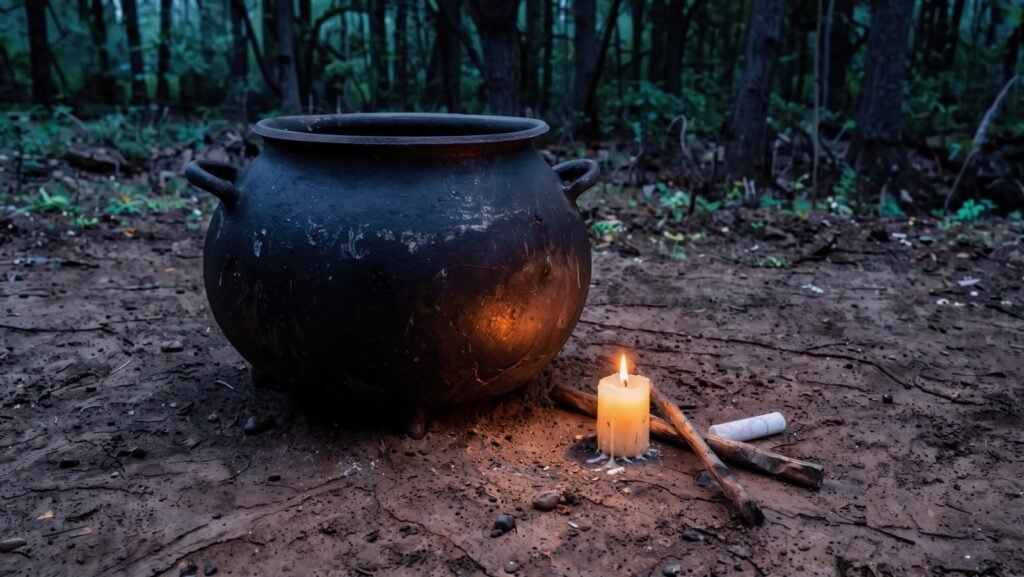
The Nganga is the vessel at the centre of a house in Nkisi Malongo. The word it carries is older than the vessel, and that is the first thing worth knowing about it.
The name came first
In the old Kongo kingdom the Nganga was the priest. The name belonged to the person who held the power and the wisdom to attend to a community and its metaphysical ailments, and to the adverse conditions that settled on people and would not lift. Those who were to become Nganga were taught by elders who held the license and the ability to teach the matters of spiritual and medicinal healing.
The training happened in the forest
Becoming an Nganga required initiation in the mfinda, the forest, where the candidate was isolated from the community to receive lessons and to be reborn. Three societies did that teaching in the Kongo, which were Kimpasi, Lemba and Khimba, and Lemba is the one that matters most to this tradition. When open practice meant abuse or death and refusing to convert carried the same price, those societies went underground rather than end. The history of that is its own account.
What the word means now
Today the word is used for the vessel. The meaning moved from the person to the thing the person works, and the older sense did not go away, which is why the term holds more than one meaning depending on what is being addressed. A reader who meets the word in the report of a crime and a reader who meets it in a house are meeting two different uses of one name.
What an Nganga is
It is a vessel built to house a spirit. That spirit is dealt with as the Nfumbe, the one a Tata has made a pact with, and the vessel is what keeps it and what the work goes through. Nfumbe is in the glossary along with the other words this page uses.
Why it sits at the centre of a house
A house is arranged around its vessel. The room a house keeps is kept for it, and what a house calls an altar is that room. The vessel is not decoration and it is not a display. It is the working centre of the house, and when someone from outside describes the strange heart of the place, the vessel is usually what they were pointing at.
It is not an Mpungu
The Mpungu are the gods of the tradition. The Nganga is not one of them, and it is not a spirit. It is a vessel that a spirit is housed in and worked through. The two get written about as though they were the same kind of thing, and they are not the same kind of thing at all.
One word, more than one thing
Nkisi behaves the same way. Nkisi is the sacred medicine granted by Nzambi, and Nkisi is also the objects a Nganga constructs to hold a particular spirit or force so that it can carry out a task. The minkisi statues with nails driven into them are the ones a museum visitor is most likely to have seen. One word, more than one thing, and the only way to read it is to know what is being addressed.
What the sensational description gets wrong
The reporting that owns the search for this word describes the Nganga as a cauldron of human remains, and the sites that repeat it are repeating one another. The tradition does not talk about the vessel that way. What goes into a vessel, how it is built and what it is fed are matters between a Tata and the spirit, and they are not published. That is the answer this page gives and it is the honest one. A reader who has come for the contents will not find them here, because they do not belong here, and a page that printed them would be wrong about the tradition whether or not its details were right. The long campaign behind that kind of reporting is on its own page.
What the name tells a reader
The word named a person before it named a vessel. The office came first and the thing it works came second, and the order is worth keeping. A person does not become a Tata by acquiring a vessel. The vessel belongs to a person who was already made into one, which is what initiation is for. Let the tradition speak.